The route at a glance
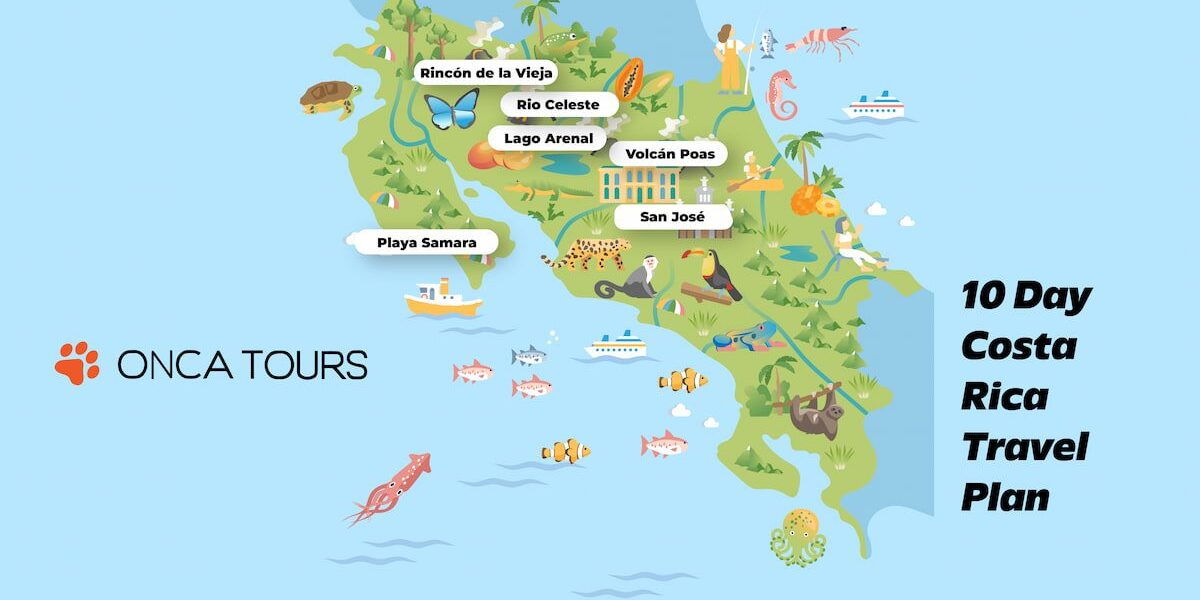
San José → Poás Highlands → La Fortuna → Río Celeste → Rincón de la Vieja → Playa Sámara
The country that makes you slow down
Costa Rica is one of those rare places that actually delivers on its promise. The forests are absurdly green. The waterfalls are cold. The locals call it pura vida — pure life — and after about three days, you stop thinking it’s a cliché. This route runs from the central highlands down to the Pacific coast, passing through La Fortuna, the electric-blue waters of Río Celeste, the bubbling mud of Rincón de la Vieja, and finally Playa Sámara, where the trip ends at the edge of the ocean. Ten days is enough to get the full picture without feeling like you’re sprinting through it.

Day 1: San José — Arrive and Eat Something
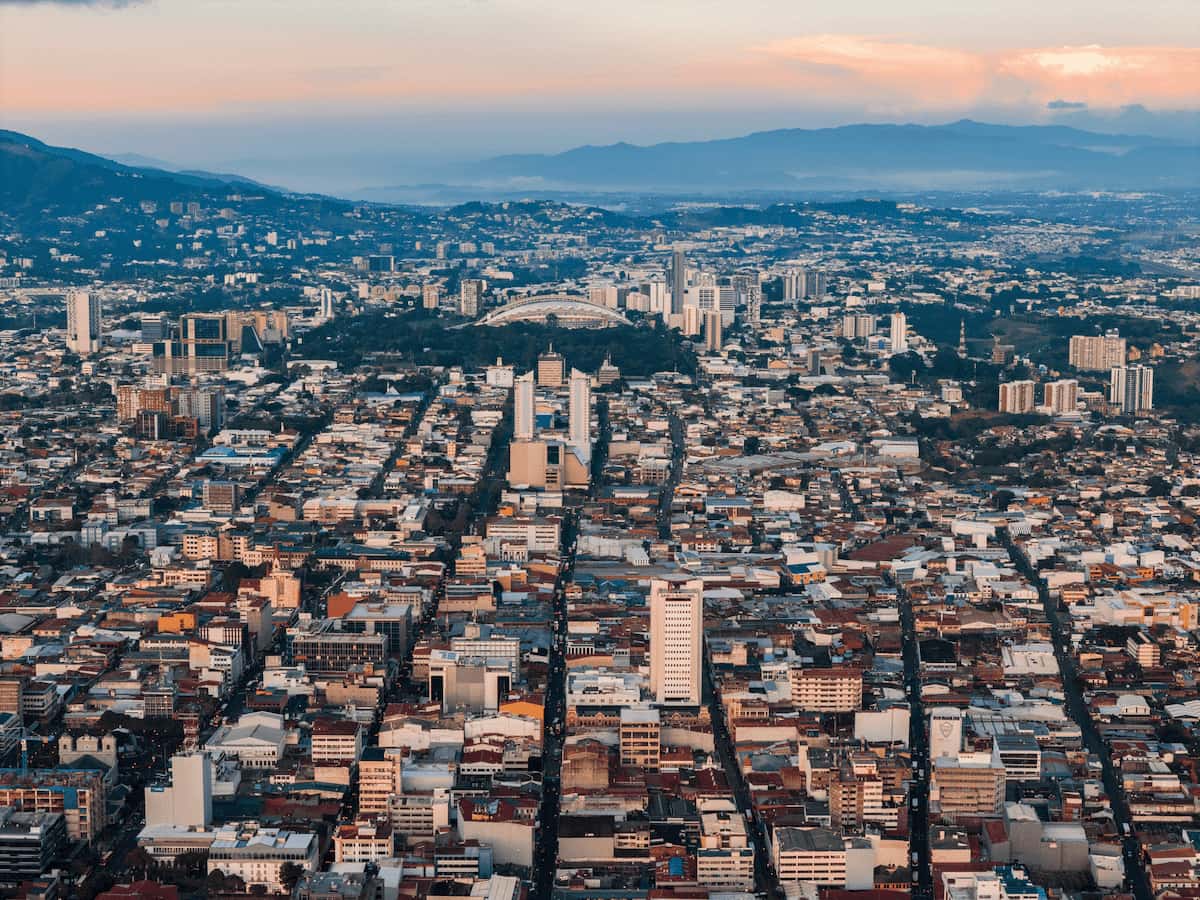
You don’t need to do much today. Land, get to your hotel, and go find a casado — the classic Costa Rican plate of rice, beans, plantains, and whatever protein the kitchen feels like. If you have energy, walk through Barrio Escalante, a neighborhood full of good restaurants and no pressure to be anywhere. The real trip starts tomorrow.
Days 2–3: Poás Volcano & a Coffee Farm
An hour and a half from San José, the highlands feel like a different country — cooler, quieter, draped in cloud. The crater at Poás Volcano holds one of the world’s most acidic lakes, a pale turquoise circle at the bottom of a 300-meter drop. On a clear morning, you can stand at the rim and look straight down into it. On a cloudy one, you see nothing but white mist, which is somehow equally dramatic.
The second day is slower. A local coffee farm walk — not the packaged tourist version, but the kind where someone who’s been growing coffee for thirty years shows you what a ripe cherry looks like and hands you a cup at the end. You’ll never buy supermarket coffee with the same enthusiasm again.
Days 4–5: La Fortuna & Arenal Volcano
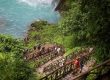
La Fortuna has one of those waterfalls that feels almost unfair. You hike down a steep path for twenty minutes and then it’s just there — 70 meters of water crashing into a swimming hole so cold it knocks the breath out of you. You’ll get back in immediately anyway.
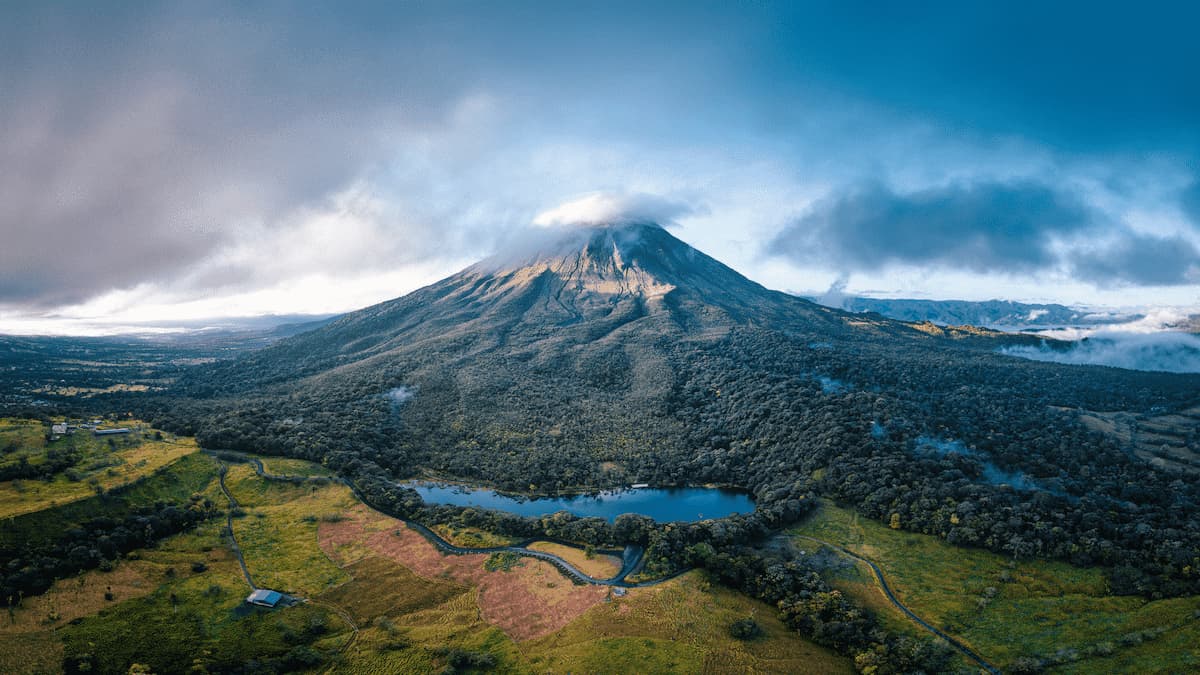
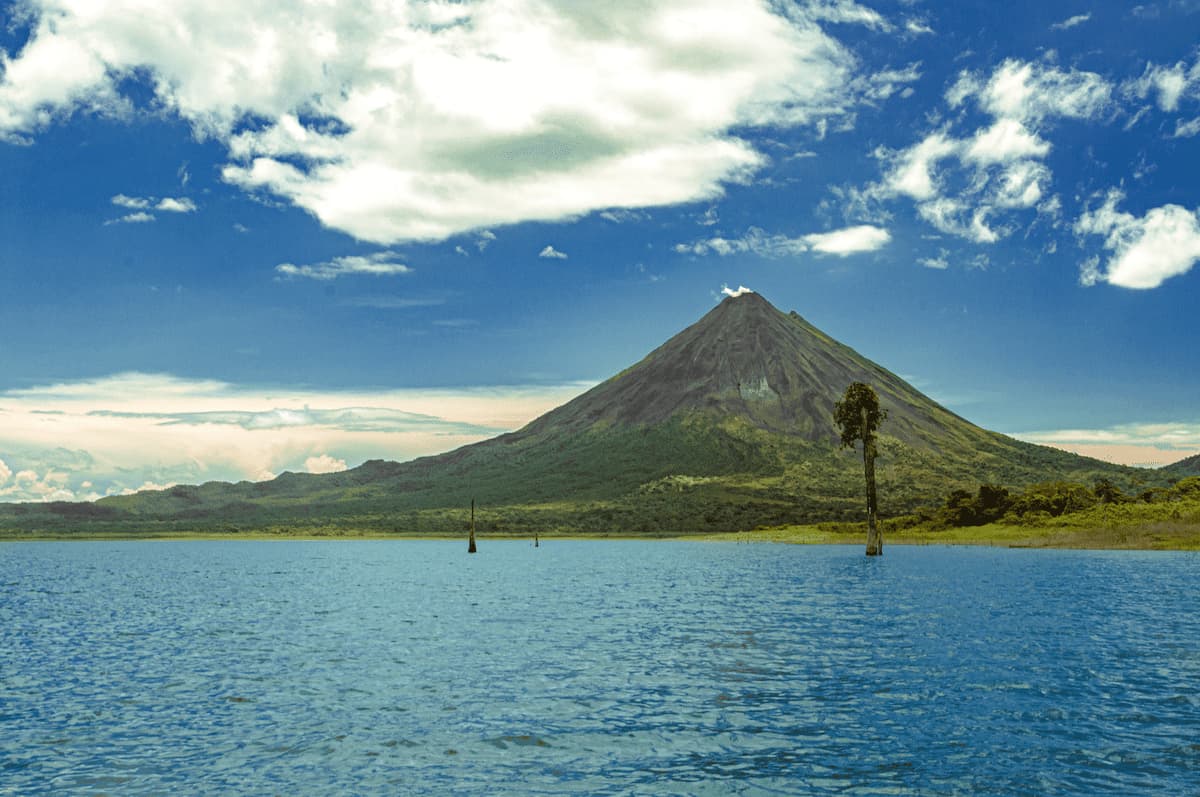
Arenal Volcano looms over the whole area, its cone near-perfect, often hidden by cloud. The evenings here belong to the hot springs — not the plastic resort kind, but the ones where warm thermal water runs through jungle into natural pools and you can hear the frogs in the dark.
Days 6–7: Río Celeste & Tenorio Volcano National Park
Photographs of Río Celeste look touched up. The water is an impossible turquoise — not tropical-ocean blue, but something closer to the sky right after a storm, running fast and cold through black volcanic rock. The color comes from a chemical reaction where two colorless streams meet inside Tenorio Volcano National Park. The exact spot is called Los Teñideros, and watching it is genuinely strange — clear water on one side, vivid blue on the other, and the line between them is sharp.
The park trail takes you past a waterfall, a field of blue-bottom hot springs, and enough wildlife that you’ll want to walk slowly. Howler monkeys, toucans, coatis. Give it a full day. The second day is for the river itself — an active float through the surrounding jungle that’s a good deal more fun than it sounds on paper.
Days 8–9: Rincón de la Vieja
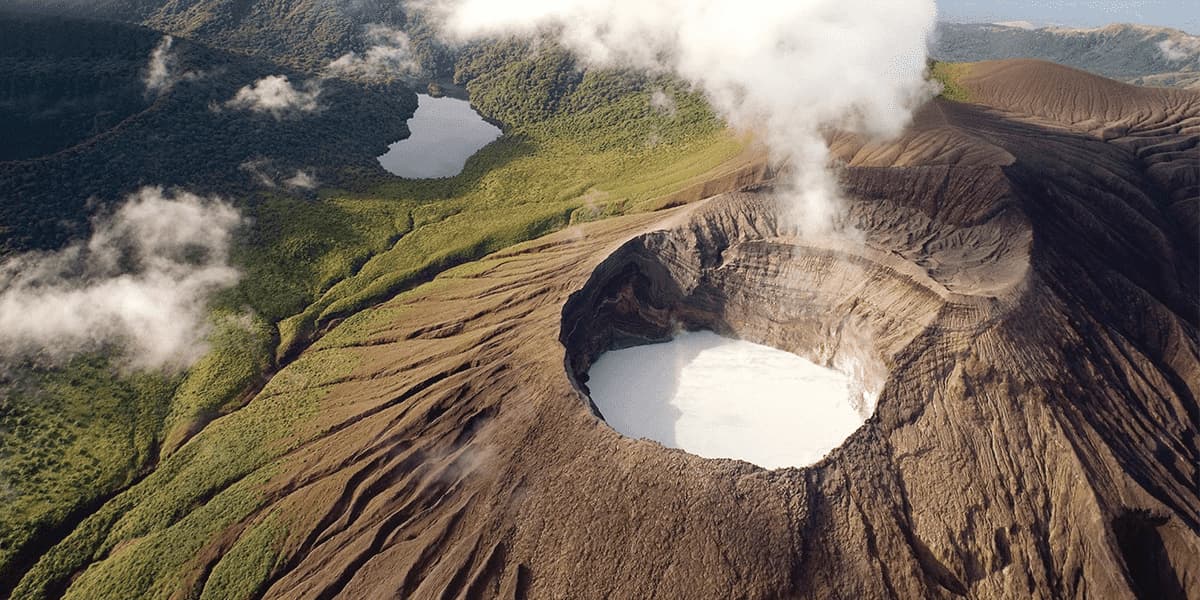
This is the weird, raw part of the trip. Rincón de la Vieja is an active volcano, and its park feels like it’s barely holding the planet together — mud pools that burp and bubble, sulfur vents you smell before you see them, small craters filled with boiling gray liquid. It’s not beautiful in the way a waterfall is. It’s beautiful in the way that reminds you the earth is doing something under your feet.
On the second day, a local cooking class grounds everything back in the human side of the country. Someone’s grandmother walks you through a traditional meal. You eat it at her table. It’s the kind of thing that doesn’t sound like much until you’re actually there.
Day 10: Playa Sámara
The last day is simple by design. Playa Sámara is a long, calm arc of sand on the Pacific coast — protected by a reef, so the waves are gentle. You can swim. You can do nothing. You can sit at a bar at the water’s edge and think about the fact that you stood next to a bubbling mud volcano three days ago. The drive here is long — four hours from Rincón — but the descent toward the coast, watching the landscape flatten and dry out and the ocean appear on the horizon, is a good ending.
Where to Stay
The accommodation question in Costa Rica is less about star ratings and more about location. Being an hour from Tenorio Volcano National Park means an early-morning start just to beat the crowds. Being fifteen minutes away means you can be on the trail before the tour buses arrive.
For the Río Celeste section of this trip, Katira Tree Houses puts you in the rainforest itself — elevated cabins surrounded by trees, a short drive from the main trails. It’s the kind of place where you wake up to bird sounds before the alarm goes off. For the rest of the itinerary, each region has solid options across budgets. The key everywhere: book the place closest to what you want to do.
Getting Around
Roads in Costa Rica can be slow — narrow, potholed, occasionally unpaved. A 90km drive can take two and a half hours. The flip side is that the scenery through the windshield is often half the trip. Here’s what to expect between each stop:
San José → Poás: 1.5 hrs | Poás → La Fortuna: 2.5–3 hrs | La Fortuna → Río Celeste: 1.5–2 hrs | Río Celeste → Rincón de la Vieja: 2–2.5 hrs | Rincón → Playa Sámara: 3–4 hrs | Playa Sámara → San José: 4.5–5 hrs
A 4WD isn’t always necessary but it removes a lot of anxiety on back roads, especially in the rainy season.
When to Go
Most travelers hear “rainy season” and picture a week of being stuck inside. What actually happens: the morning is clear, you hike, you see things, the sky opens up in the afternoon for an hour, and then it stops. The forest smells incredible afterward.
The green season (May–November) is when Río Celeste turns its most vivid — the extra water makes waterfalls fuller and everything feels more alive. The dry season (December–April) makes sense if you’re prioritizing beach time at the end. Either way, don’t let the rain put you off. The crowds are smaller and the country is at its most itself.
What This Actually Costs
This is a mid-range trip — not a backpacker route, not luxury. On average, expect to spend $120–250 USD per person per day, covering accommodation, food, activities, and fuel. Travelers on a tighter budget can bring that down to $80–120 by choosing simpler stays and self-guided activities. The biggest cost variable is guided tours. Hiring a car for the full trip runs $400–700 depending on season and vehicle — book early either way.
Do I need to rent a car?
Yes, unless you’re willing to spend a lot on taxis and accept limited flexibility. Río Celeste and Rincón de la Vieja are genuinely hard to reach without your own wheels. A standard car works for most of the route; 4WD matters most around Tenorio and in the rainy season.
Is 10 days actually enough?
For this specific route, yes. Two nights in most places gives you one day to explore and one to breathe. If you try to add the Caribbean coast or the Osa Peninsula it stops working — those deserve their own trip.
What should I pack?
One pair of proper hiking shoes with grip. A light rain jacket. Insect repellent with DEET — the natural stuff does nothing in the jungle. A dry bag for river days. Sunscreen. Everything else can be bought in San José if you forget it.
Is this trip okay with kids?
Yes. Wildlife spotting, hot springs, the waterfall swim, the cooking class — all of it works with kids. The Tenorio hike is about 10km round trip with some mud, so it depends on the child. Nothing on this itinerary is extreme. Plan for slower days and it’s genuinely great for families.
What makes Río Celeste special?
The blue is caused by volcanic silica particles scattering light — the same reason the sky is blue, but happening in a river. You hike through dense rainforest to get there, which makes the arrival feel earned. Go early to beat the crowds and get the best light on the water.