A Local Guide to Birds in Río Celeste
According to local naturalist Odir Rojas, who wrote and shared these field notes from his experience guiding in the Río Celeste area, this region is home to many birds worth noticing. Río Celeste is known for its striking blue water, but the forest around it also holds a quieter kind of beauty: colorful birds, migratory visitors, and species with unique courtship behaviors.
These are a few birds that can be seen in the area, based on Odir’s local knowledge.
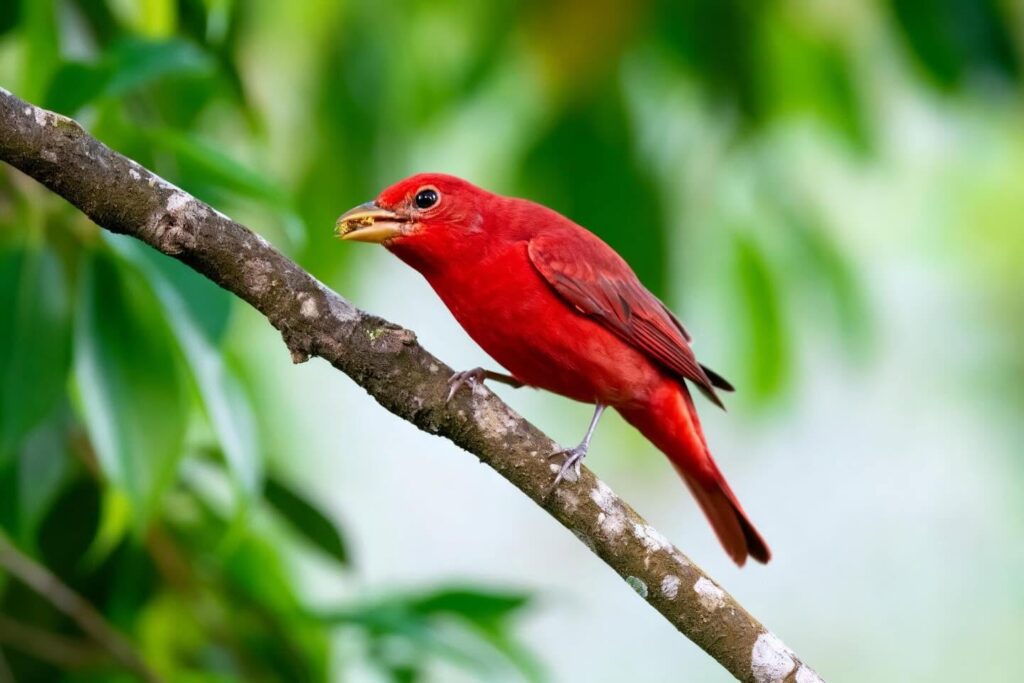
Summer Tanager
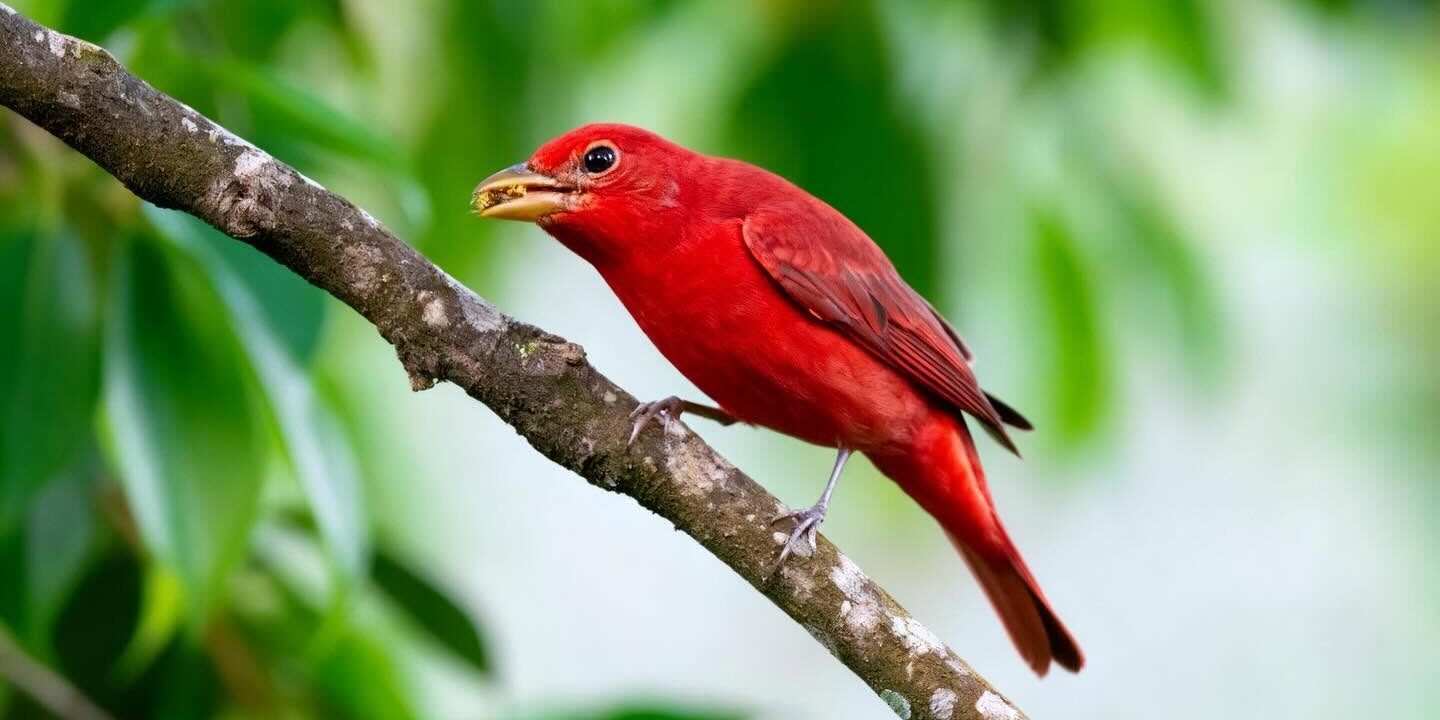
The Summer Tanager, also known in Spanish as tangara veranera, is a migratory bird. It usually arrives in the area around October and returns north around March or April, traveling back toward the United States and possibly parts of Canada.
The male is an intense red, easy to recognize when seen among the trees. The female, on the other hand, has a softer yellowish color.
Unlike some other birds, the Summer Tanager is not especially known for a very dramatic behavior. Its beauty is mostly in its color and in the fact that it is a seasonal visitor to the forest.
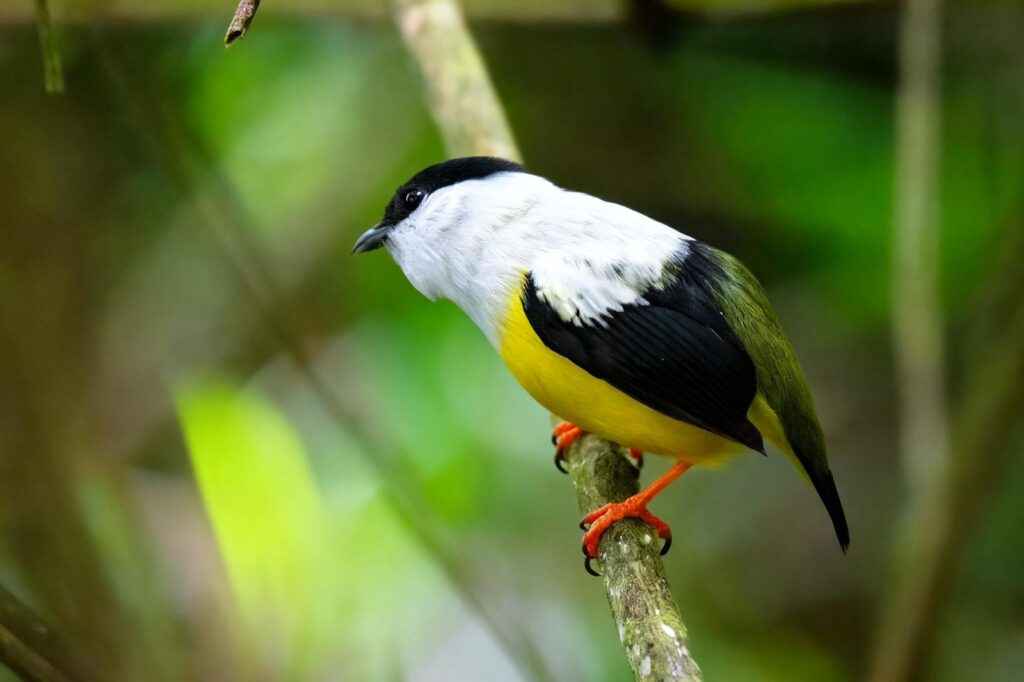
White-collared Manakin
The White-collared Manakin, known in Spanish as saltarín cuelliblanco, is one of the most interesting birds mentioned by the guide.
This bird belongs to the family of the manakins, birds known for their courtship displays. To attract a female, several males gather in what is called a lek. A lek is an organized assembly of males where they perform to catch the attention of a female.
During this display, the males jump, dance, fly, and perform coordinated movements. Meanwhile, the female stays nearby, watching, until she decides which male to choose.
One curious detail about the White-collared Manakin is that it can make sounds with its wings. According to the guide, the sound is similar to snaps or small thunder-like cracks while the males are performing their lek.
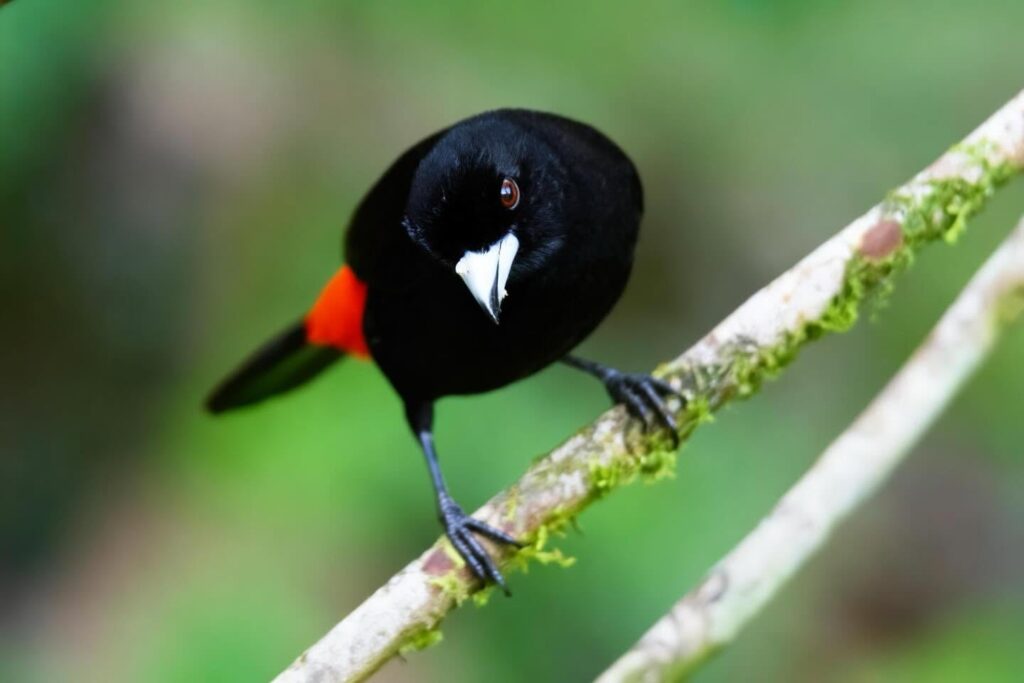
Scarlet-rumped Tanager
The Scarlet-rumped Tanager is another tanager found in the area. It is a fruit-eating bird, which means it feeds mainly on fruit.
The male has an intense red and black coloration, with a light blue-colored beak. The female is brown, much more discreet in appearance.
It may not have a very elaborate behavior to describe, but it is still a beautiful bird to notice while exploring the forest.
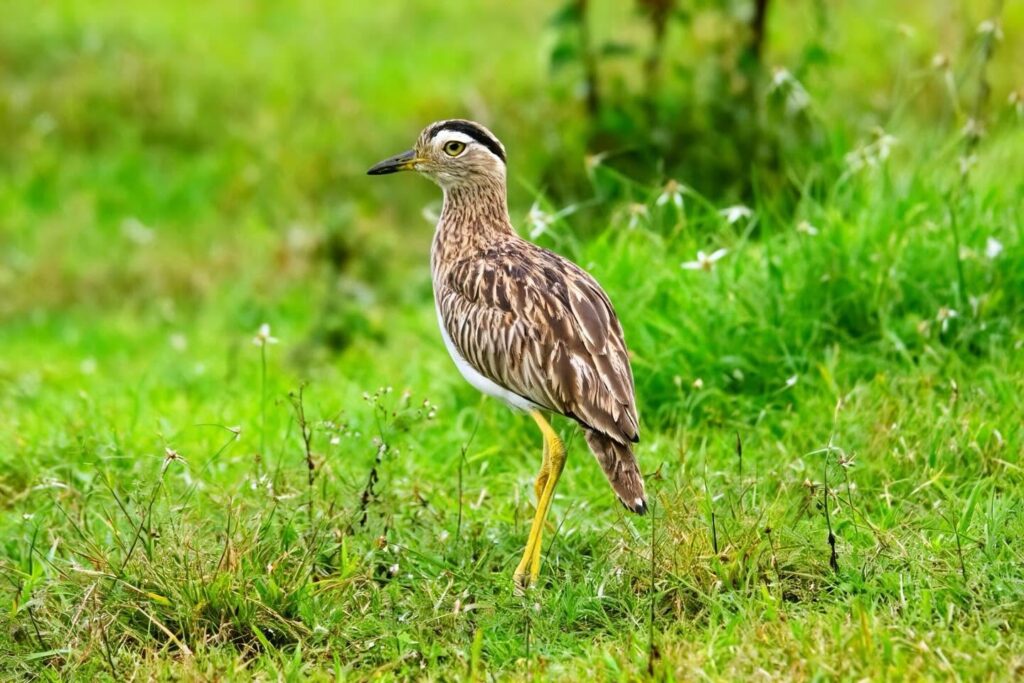
Double-striped Thick-knee
The Double-striped Thick-knee, known locally as algarabán, is a bird more commonly associated with savanna-like areas.
According to the guide, it has usually been seen more often on the Pacific side, but lately it has been moving more toward the Caribbean side.
This makes it an interesting species to mention in the Río Celeste area, especially because it shows how bird presence can change depending on the region and the conditions around them.
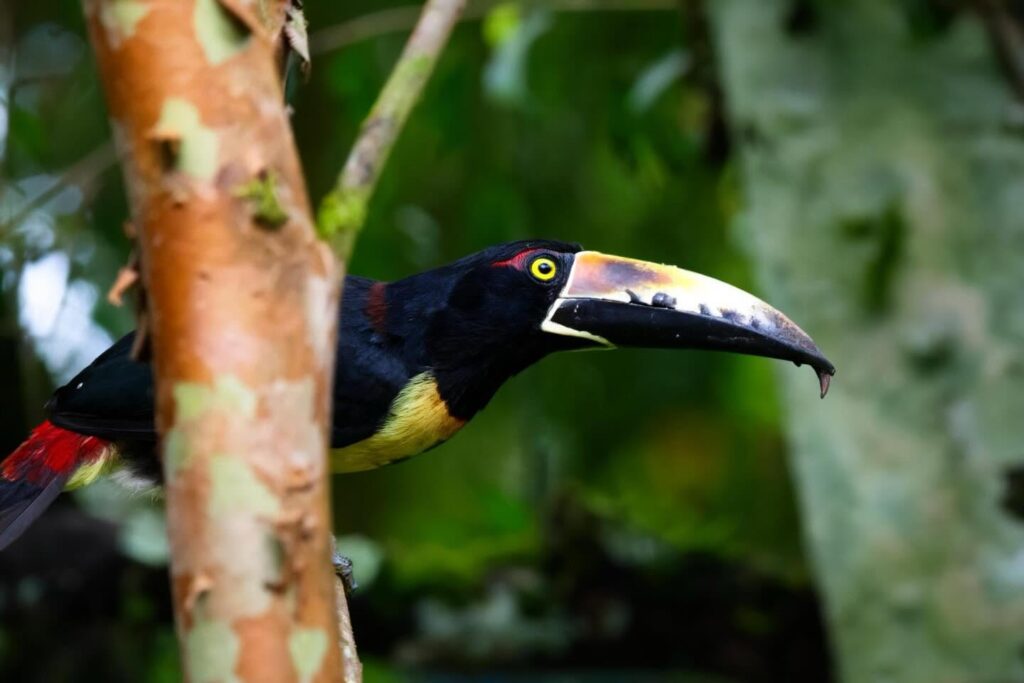
Toucans in Río Celeste
Toucans are also part of the birdlife that makes Río Celeste and the Tenorio area so special. Around the rainforest trails, visitors may hear them before seeing them, moving through the canopy or feeding near fruiting trees.
The Río Celeste and Tenorio region is especially interesting because the changes in elevation create different habitats in a relatively small area. This allows several bird species, including toucans, to be present in the same general region. For visitors, this means that a walk through the forest can reveal much more than the famous blue river: it can also become a chance to notice the sounds, colors, and movements of tropical birds
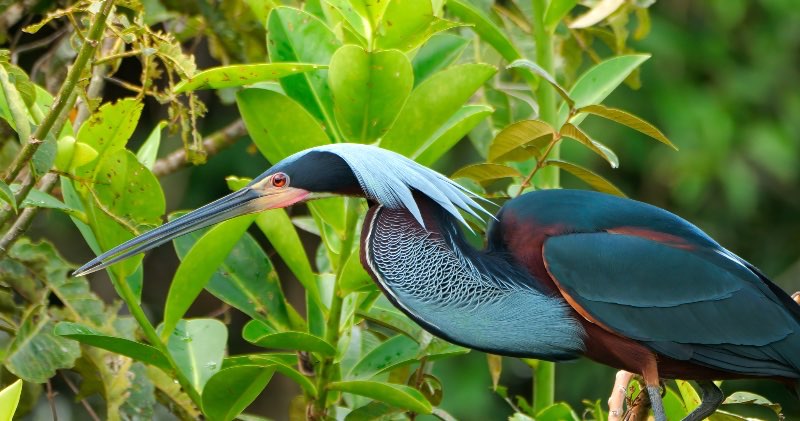
Agami Heron
The Agami Heron is one of the rarest sightings in the birding world — and one of the most rewarding. For most of the year, this elusive heron keeps to the shadows, tucked into dense vegetation along the edges of lagoons and forest streams. Its shyness is so pronounced that ornithologists still don’t have a reliable estimate of how many exist in the wild.
That rarity comes at a cost. The Agami Heron is classified as Near Threatened, tied closely to a narrow band of habitat: swamp forests, mangroves, and forest streams below 300 meters in elevation. These wetlands once stretched across Central and South America almost without interruption. Cattle ranching and agriculture have since closed in on them, and the heron’s range has closed in with it.
But once a year, this secretive bird reveals itself. Agami Herons nest in dramatic rookeries — colonies that can hold hundreds, even a thousand nests in a single stretch of forest. Only a handful of these rookeries are known to exist across the entire region. In 2025, a new one was discovered near Katira de Guatuso, Costa Rica — and it’s quickly become one of the most accessible places on Earth to witness this extraordinary bird at home in the wild.
At Onca Tours, we’ll take you there.
A Place to Listen and Observe
Birds in Río Celeste are not only about bright colors. Some arrive with the seasons, some perform surprising courtship displays, and others quietly move through different regions.
Walking through this area with a local guide helps visitors notice details that could easily be missed: a flash of red in the trees, a yellowish female resting nearby, a snapping sound made by wings, a toucan moving through the canopy, or a savanna bird appearing where you might not expect it.