Best Locations, 6 Species & Expert Tips from a Local Guide
Costa Rica is one of the best places in the world to see toucans in the wild. With year-round fruit production, protected rainforest, and diverse elevation zones, the country supports six different species of toucans and toucanets.
But where exactly should you go?
According to local naturalist Odir Rojas, who has guided visitors for more than 20 years in Guatuso and Katira near Parque Nacional Volcán Tenorio, toucans can be seen across much of the country — but certain regions offer significantly better opportunities.
This guide explains where to see toucans in Costa Rica, which species you can expect among other birds in Rio Celeste, and how to increase your chances of a successful sighting.
Quick Answer: Where Are Toucans Most Common?
If you’re short on time, here’s the direct answer:
- Caribbean region – Highest density due to consistent rainfall and fruit availability
- Northern Costa Rica (Río Celeste / Tenorio area) – Multiple species within a compact elevation range
- Pacific region – Home to one distinct species not found in Tenorio
- Best time of day – Early morning and late afternoon
- Best clue – Areas with fruiting trees (especially bananas and plantains)
How Many Species of Toucans Are in Costa Rica?
Costa Rica is home to six species in the Ramphastidae family:
- Keel-billed Toucan
- Chestnut-mandibled Toucan
- Collared Aracari
- Yellow-eared Toucanet
- Emerald Toucanet
- Fiery-billed Toucan (Pacific only)
Their distribution depends largely on elevation, forest structure, and food availability.
Toucans You Can See in Northern Costa Rica (Río Celeste & Tenorio)
The rainforest around Río Celeste and Tenorio is particularly interesting because of its vertical habitat diversity. In a relatively small geographic area, elevation changes create overlapping ecological zones — allowing multiple species to coexist.
Many of the best areas to spot toucans are located along rainforest trails near Río Celeste. Our guided experiences at Onca Tours’ Río Celeste Hiking Tour increase your chances of wildlife sightings by focusing on feeding zones and elevation changes.
Keel-billed Toucan (Ramphastos sulfuratus)
Rio Celeste Costa Rica doesn’t just please the eyes — it tunes your ears and sharpens your sense of wonder. Watch white-faced capuchins leap between branches, sloths rotate in slow motion, and morpho butterflies flash a blue that rivals the river’s. Birders listen for toucans; night walks reveal glass frogs and a choir of tiny voices. Every visit feels like a new chapter — the forest decides what to show you.
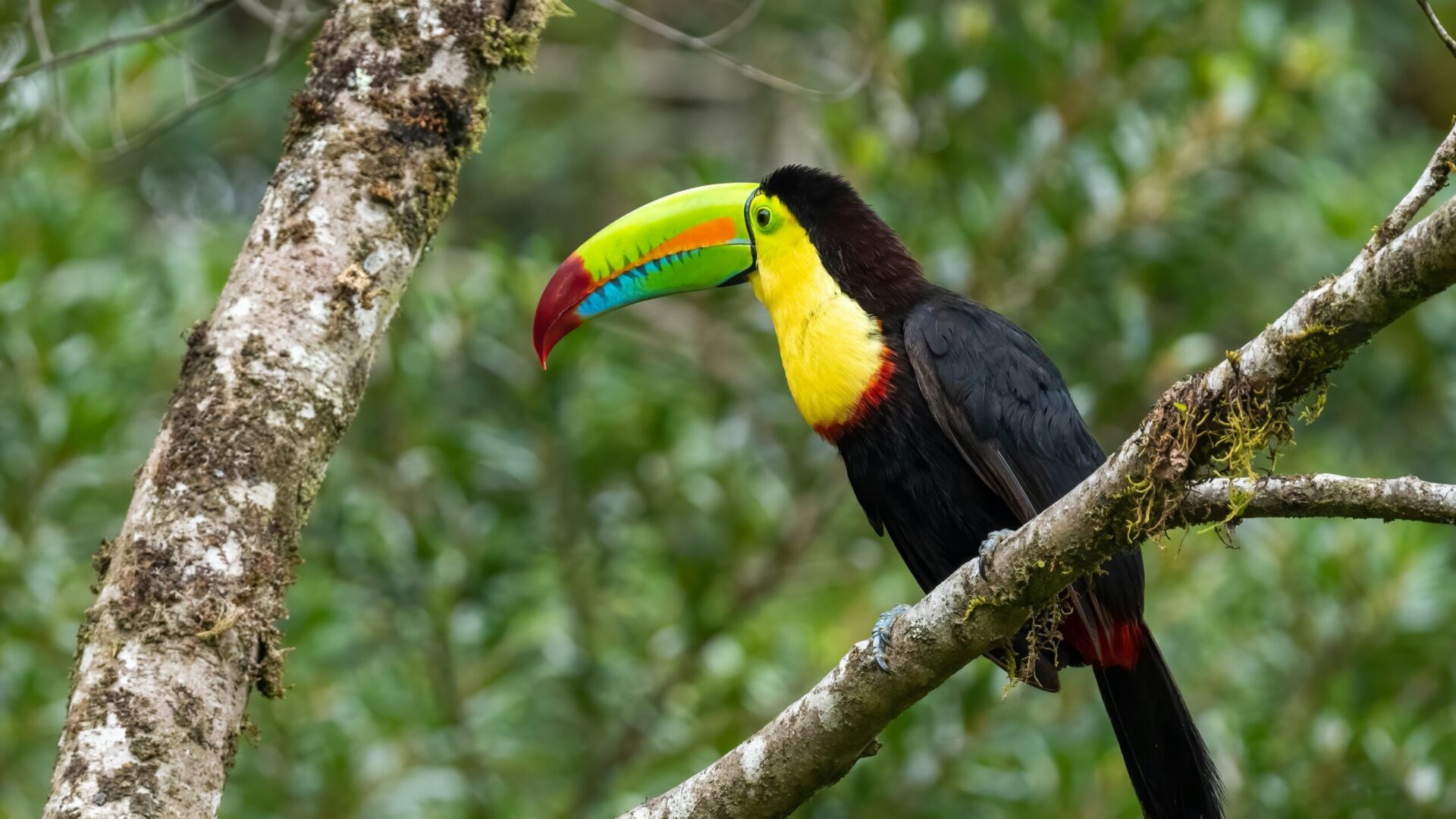
Photo by EcoNaturalist.com on Unsplash
Often called the “rainbow-billed toucan,” this is the most recognizable species in Costa Rica.
Scientific profile:
- Family: Ramphastidae
- Diet: Primarily frugivorous (fruit-based diet)
- Habitat: Lowland and mid-elevation rainforest
- Activity: Diurnal (active during daylight hours)
They are commonly seen in the Caribbean lowlands and mid-elevation forest near Tenorio.
According to Odir Rojas:
“If there are bananas or plantains nearby, they will come.”
Yellow throated toucan (Ramphastos ambiguus)

Photo by Michael Romanov on Unsplash
Larger and darker than the Keel-billed Toucan, this species is often heard before it is seen.
Key characteristics:
- Deep croaking vocalization
- Prefers tall canopy trees
- Found in northern and Caribbean regions
This species frequently travels along upper canopy corridors in mid-elevation rainforest.
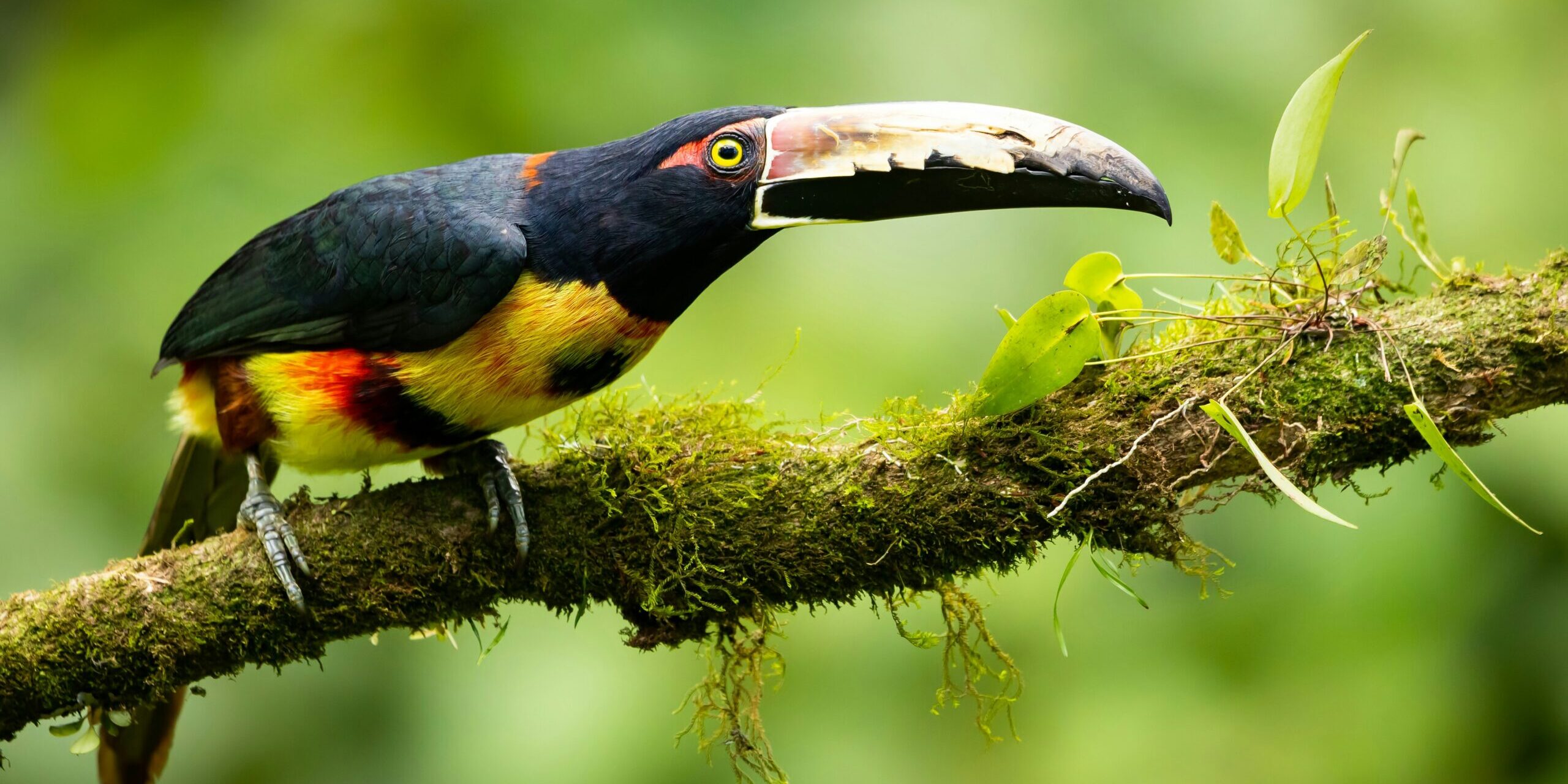
Collared Aracari (Pteroglossus torquatus)
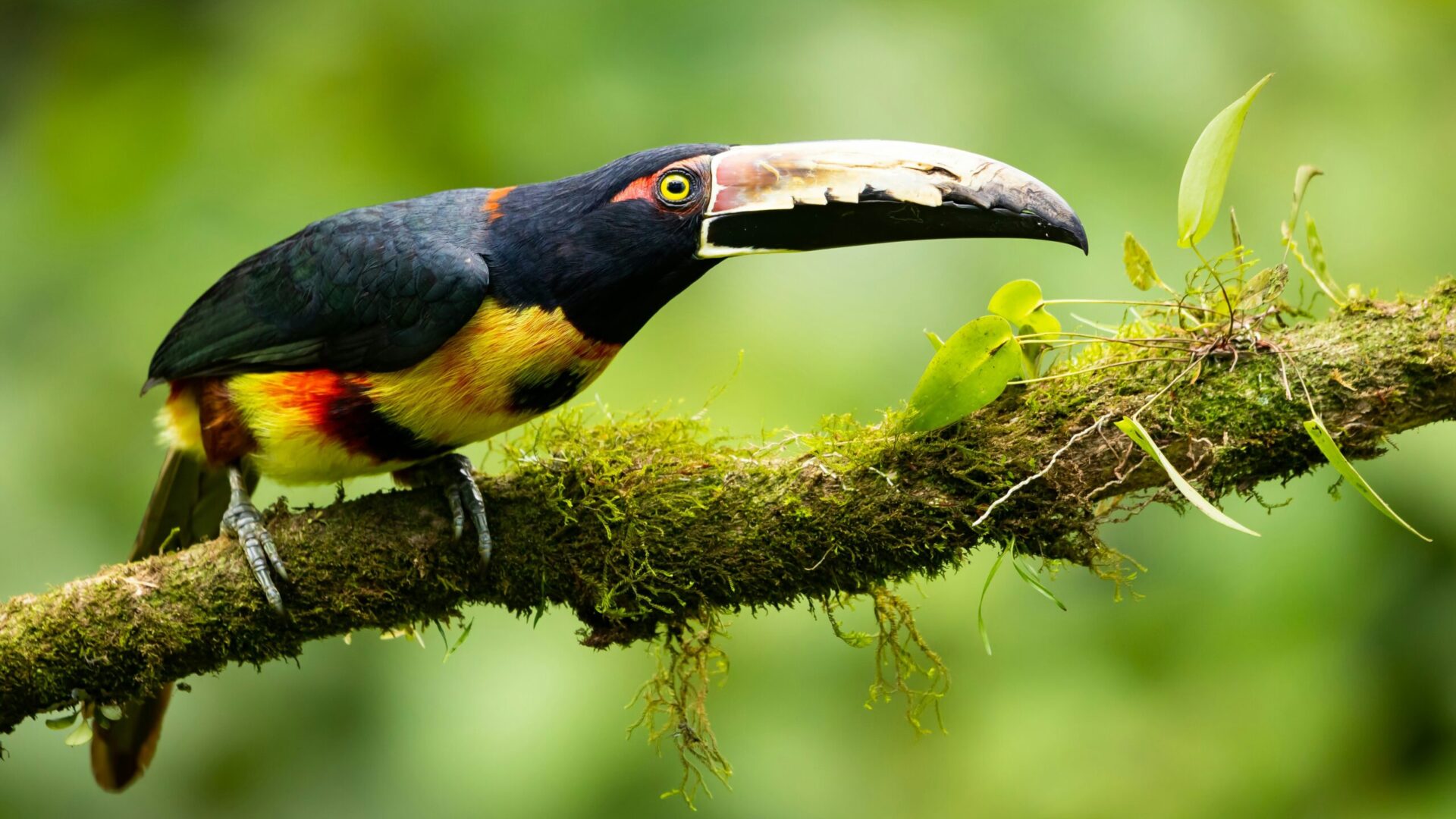
Photo by César Badilla Miranda on Unsplash
Smaller than true toucans, the Collared Aracari is highly social and often seen in small groups.
Behavioral notes:
- Agile and active
- Frequently found in secondary growth forest
- Easier to spot when moving between branches
Yellow-eared Toucanet (Selenidera spectabilis)
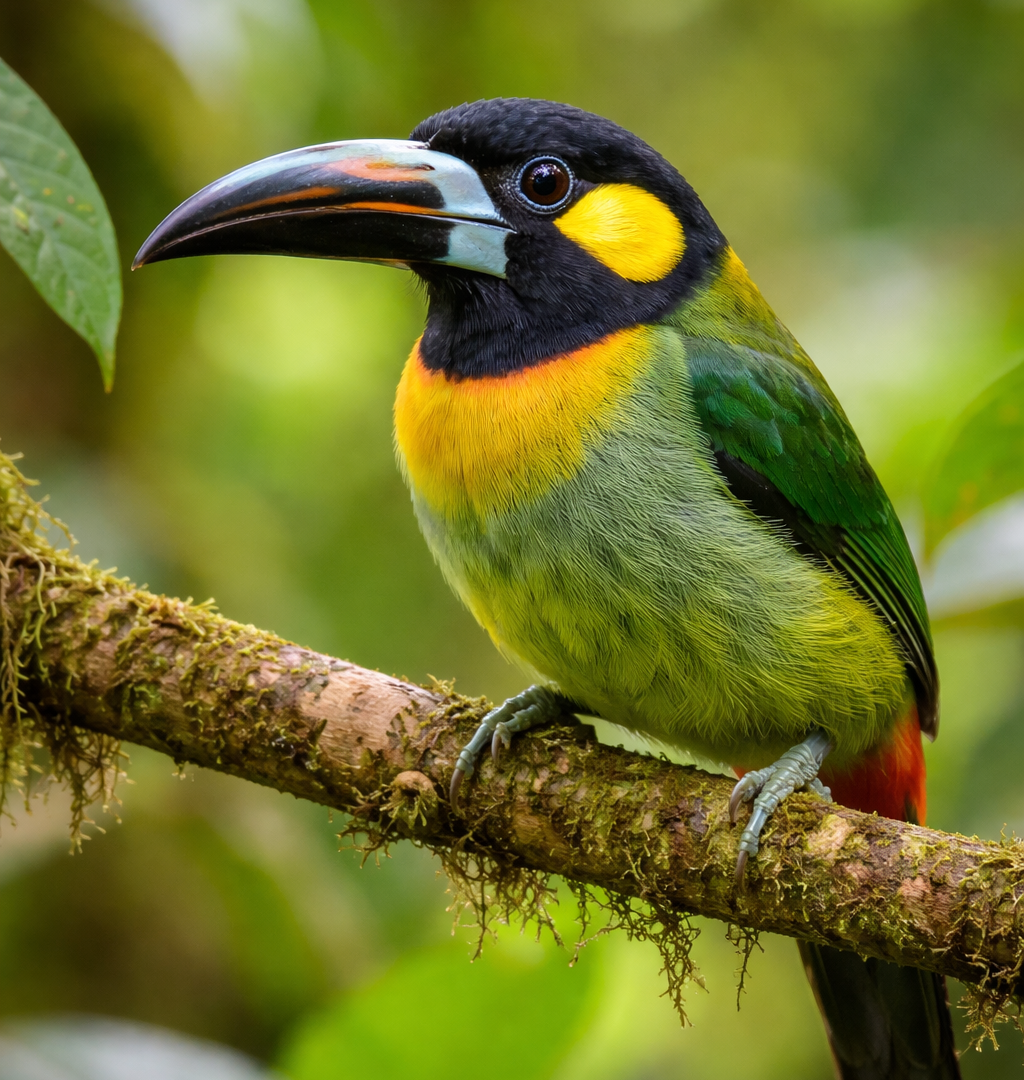
Found at slightly higher elevations within Parque Nacional Volcán Tenorio.
Scientific notes:
- Smaller body size
- More solitary behavior
- Prefers humid montane forest
Emerald Toucanet (Aulacorhynchus prasinus)
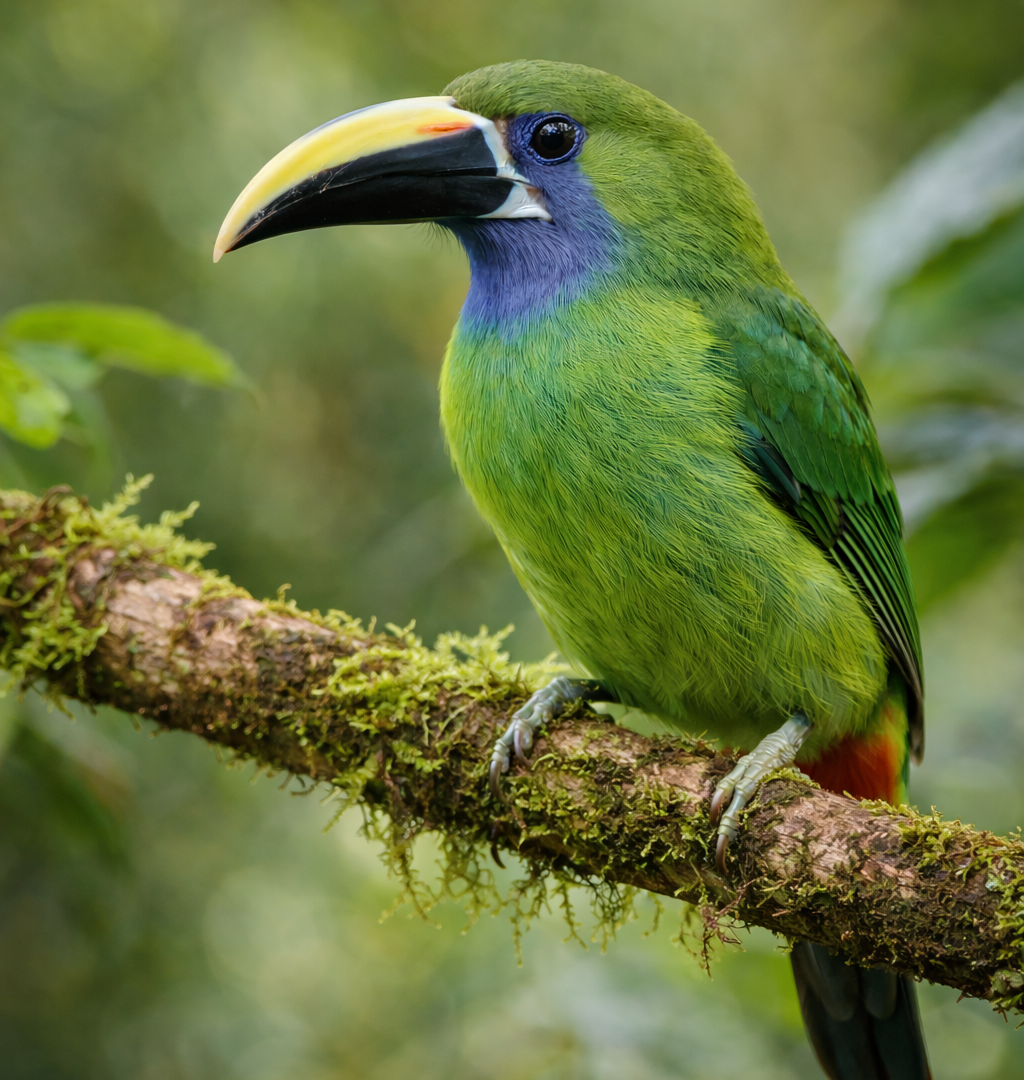
Smaller than true toucans, the Collared Aracari is highly social and often seen in small groups.
Behavioral notes:
- Agile and active
- Frequently found in secondary growth forest
- Easier to spot when moving between branches
Fiery-billed Toucan (Ramphastos sulfuratus costaricensis)
-Pacific Region-

Photo by Jonnathan Marin
This species is restricted to Costa Rica’s Pacific side and is not found in Tenorio.
When Is the Best Time to See Toucans?
Toucans are most active:
- Early morning (6:00–9:00 AM)
- Late afternoon (3:30–5:30 PM)
They are diurnal and feed during cooler hours.
Midday heat often reduces activity as they rest in shaded canopy areas
What Do Toucans Eat?
Toucans are primarily frugivores, meaning fruit makes up most of their diet.
They play a critical ecological role as seed dispersers. Their digestive systems allow them to transport seeds across forest areas, supporting rainforest regeneration.
They may also consume:
- Insects
- Small reptiles
- Eggs
However, fruit remains their primary food source.
Why Elevation Matters in Tenorio
The Tenorio region is unique because of its altitudinal gradient.
Within a short distance, you move from:
- Lowland tropical rainforest
- Mid-elevation humid forest
- Transitional montane forest
This vertical stacking allows multiple toucan species to overlap in a compact region — increasing biodiversity density compared to flatter lowland regions.
Do You Need a Guide to See Toucans?
You can see toucans independently.
However, a local guide increases your chances significantly because they:
- Recognize vocalizations
- Identify fruiting cycles
- Understand elevation zones
- Know common canopy corridors
With over two decades of experience guiding in Guatuso and Katira, Odir Rojas emphasizes that understanding altitude and feeding patterns makes sightings more consistent and educational. Birdwatchers can uncover a rich tapestry of biodiversity as they discover unique bird species worldwide. This exploration not only enhances their appreciation for nature but also encourages conservation efforts across various habitats. By observing these species in their natural environments, enthusiasts gain valuable insights into their behaviors and ecosystems.
If you’re especially interested in wildlife encounters beyond toucans, experiences like our Responsible Sloth Tour focus on ethical observation and understanding animal behavior in the wild.
Final Thoughts: Where Should You Go?
If your goal is species diversity within a short travel radius, northern Costa Rica near Río Celeste and Parque Nacional Volcán Tenorio offers excellent conditions.
Many visitors choose to stay longer in the region to increase wildlife sighting opportunities, especially in the early mornings when toucans are most active.
The Caribbean region remains the densest overall area for toucans, but Tenorio provides a rare combination of:
- Elevation diversity
- Year-round fruit availability
- Accessible rainforest habitat
Costa Rica is one of the easiest countries in the world to see toucans in the wild — especially when you know where and when to look.
If you’re exploring the Tenorio region and want a mix of wildlife and adventure, you can also explore experiences at Onca Adventure Park for a more active rainforest experience.
FAQ: Seeing Toucans in Costa Rica
Where is the best place to see toucans in Costa Rica?
The Caribbean region has the highest density. Northern Costa Rica near Río Celeste and Tenorio also offers excellent opportunities due to varied elevations.
How many toucan species are in Costa Rica?
Six species of toucans and toucanets live in Costa Rica.
What is the best time of day to see toucans?
Early morning and late afternoon are ideal.
Are toucans common in Costa Rica?
Yes, especially in forested areas with fruiting trees.
Can you see toucans year-round?
Yes. They are present throughout the year, although fruiting seasons influence activity levels.