Introduction
The White-collared Manakin is a small forest bird with a big personality.
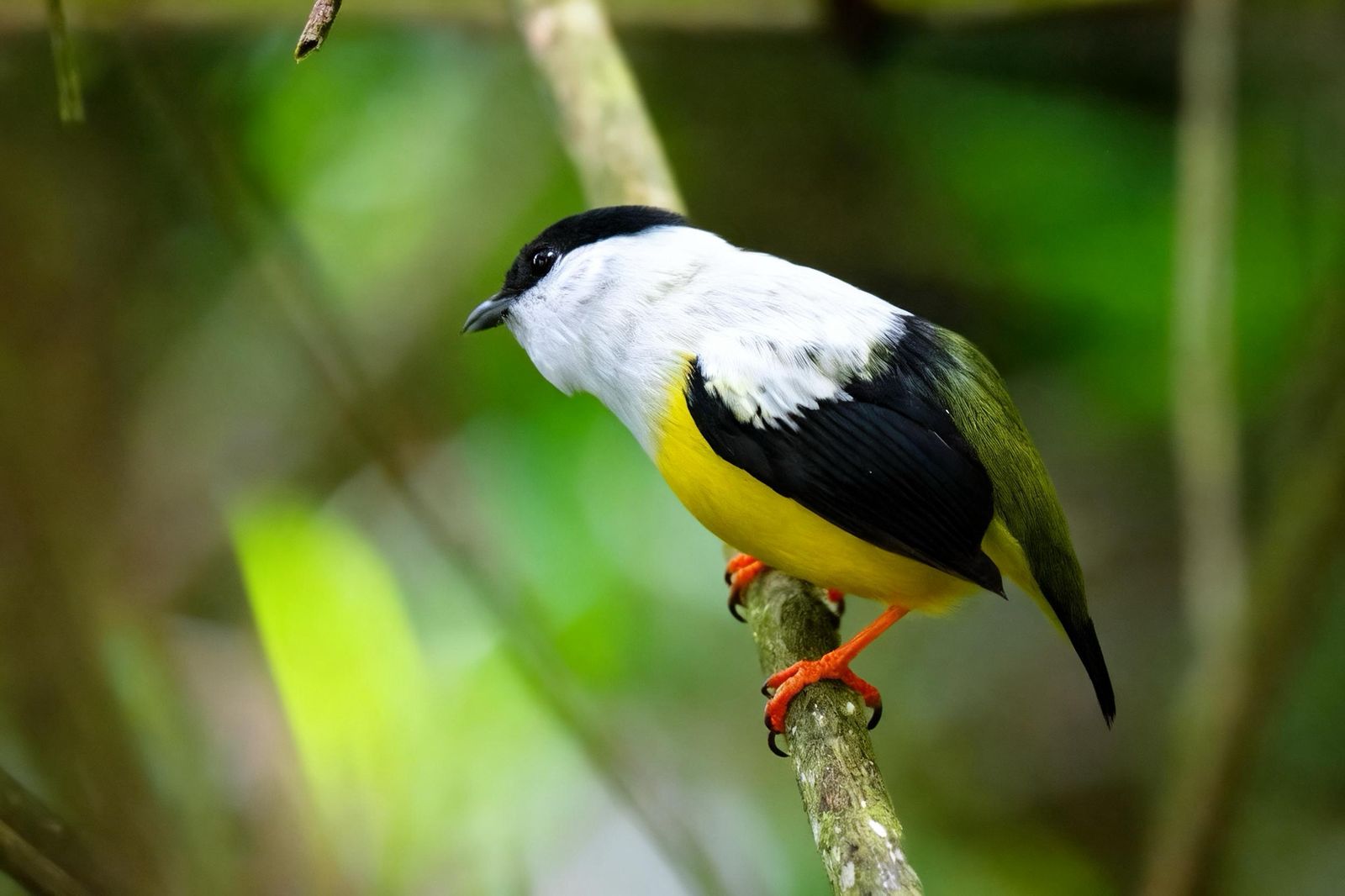
Its black, white, and yellow plumage makes the male easy to recognize once you get a clear view, but the real attraction is its behavior. Males gather at display areas known as leks, where they jump between low perches and produce sharp snapping sounds with their wings.
The species is a year-round resident in Costa Rica, making it one of the birds worth watching for while exploring the forests and natural areas around Katira de Guatuso and Río Celeste.
Quick Facts
Common name: White-collared Manakin
Scientific name: Manacus candei
Resident or migratory? Resident. The species can be found in Costa Rica throughout the year.
Best season to see it: There is no narrow viewing season. The drier months, roughly December through April, can offer easier trail conditions and good opportunities to detect active males at their display grounds.
Preferred habitat: Dense forest edges, tall secondary growth, and thick vegetation in humid areas.
Difficulty to spot: Moderate. Males often reveal themselves through their calls and characteristic wing snaps, while females can be much harder to notice among green vegetation.
How to identify it
Male White-collared Manakins are small, compact birds measuring roughly 4–4.5 inches (10–11 cm).
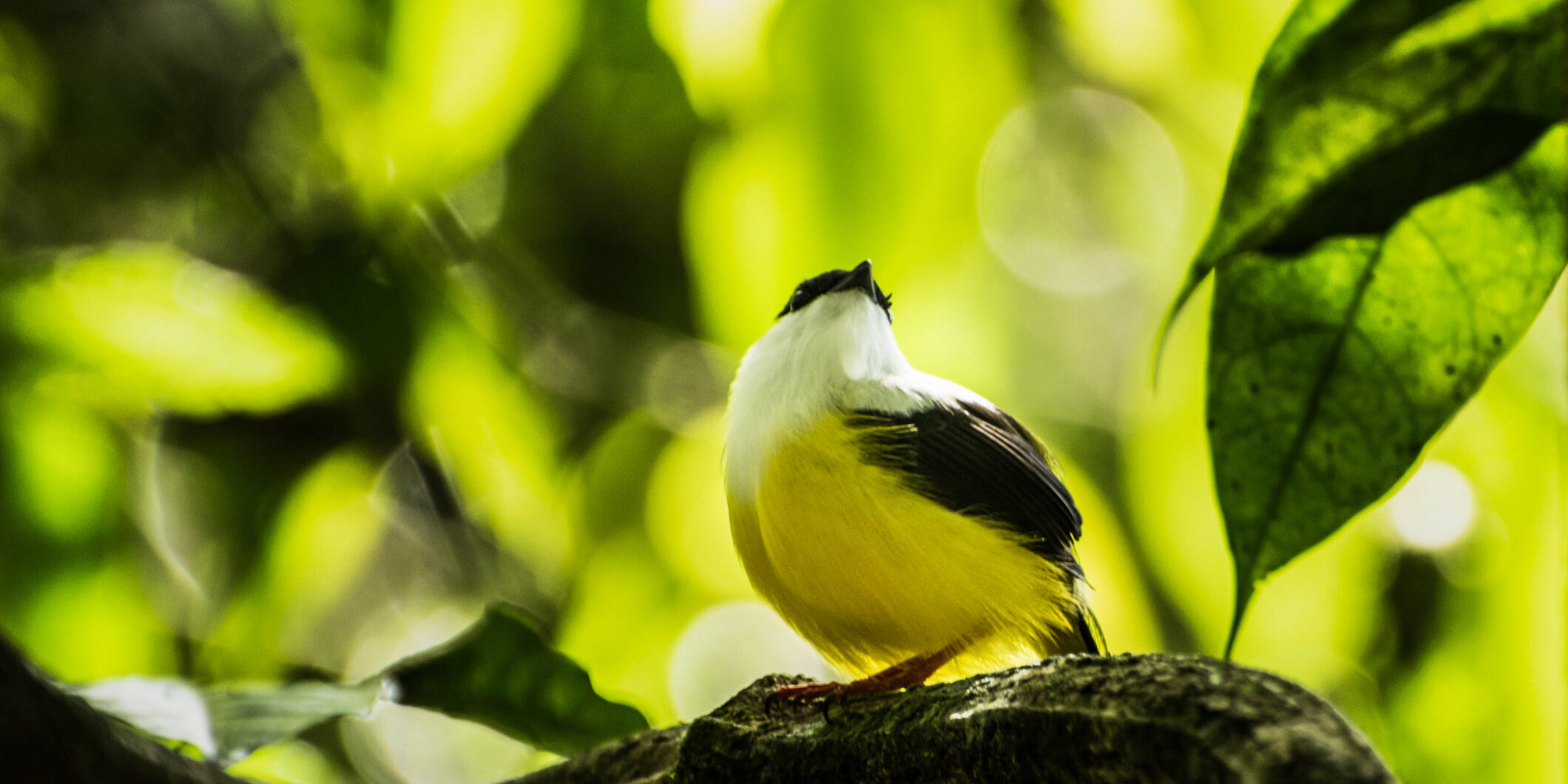
They have a black cap and back, a bright white throat and collar, and a yellow belly. In shaded forest, the flashes of white and yellow may be easier to pick out than the entire bird.Females are much less conspicuous. Their mostly olive-green plumage blends easily into dense vegetation, so a clear view may be necessary for confident identification.Behavior can also be an important clue. Males often make quick jumps between low perches while displaying, accompanied by distinctive snapping sounds from their wings.
Where to find it around Río Celeste
Look below the canopy.
This species favors dense vegetation along forest edges, secondary growth, small clearings, and transitions between mature forest and younger vegetation.Brushy areas beside trails can be especially productive, particularly when thick cover remains close to more open spaces.Open lawns, wetlands, and exposed riverbanks are less typical habitat. Instead, concentrate on humid areas with tangled vegetation and plenty of low cover.
In these conditions, listening is often more effective than constantly scanning the forest.
Best time of the year to see it
White-collared Manakins are present throughout the year.
During the drier months, generally from December through April, mornings may offer more comfortable trail conditions and slightly easier visibility along forest edges. During the greener months, thicker vegetation and frequent rain can make birds more difficult to see, although they remain present. Courtship activity may also make males more noticeable at certain times, but habitat and local activity are generally more important than choosing one particular month.
Best time of the day
Early morning bird activity is generally high, and you may pick up a male’s calls or wing snaps before you ever see him.
Late afternoon can give you another chance as activity picks up again, but mornings usually offer better conditions for listening and following movement through the understory. In the middle of the day, heat and lower activity can make the forest feel much quieter. Weather matters here, too. After heavy rain, give the forest a little time and start listening again once conditions settle. In dense vegetation, a few clear minutes without rain can make the difference between walking past a display area and realizing there’s a manakin active just off the trail.
How to Spot One
Listen first and look second.
Focus on the lower and middle levels of dense vegetation rather than scanning high into the canopy. If you hear repeated snapping or calls from the same area, stop and narrow down the sound before raising your binoculars.Watch for quick movement between low perches. Instead of trying to follow every jump, choose a small opening in the vegetation or an exposed perch and wait. Males may return to the same positions several times during a display. Patience usually works better than moving closer.
What to listen for
The most useful sound is not always a song.
Males give short, sharp calls, but they are especially known for the crisp snapping sounds produced during courtship displays. These snaps can carry surprisingly well through dense vegetation. If the sound repeatedly comes from the same small area, you may be close to an active display ground. Stay still, watch the gaps between the leaves, and wait for movement.
Local Birding Tip
Pay close attention to places where open areas meet thick vegetation.
Stay on the open side whenever possible and scan into the forest edge rather than stepping into the brush. This gives you a clearer viewing angle and reduces disturbance. Instead of trying to search the entire understory, concentrate on small openings between branches and leaves. If you hear repeated snaps, resist the urge to move directly toward the sound. A displaying male may return to the same small set of perches, and waiting quietly can produce a much better view.
Why Birdwatchers Want to See It
The White-collared Manakin is a bird where behavior can be even more memorable than plumage.
The male is striking, but seeing one perform its courtship display is often the highlight. Rapid jumps, repeated wing snaps, and activity around a small display area make the experience very different from simply finding a bird perched in a tree. The species occurs from southern Mexico through Central America to Costa Rica and western Panama. For wildlife photographers, the challenge adds to the appeal. Males are colorful and expressive, but they move quickly and often perform among branches and heavy vegetation.
Photography Tips
A 300–500 mm lens is a useful range for photographing these birds without approaching too closely.
Keep your camera aimed toward the understory rather than the canopy. Display activity may happen only a few feet above the ground.Low light can be one of the biggest challenges. Dense vegetation creates deep shade, while small openings can produce bright highlights behind the bird.A fast shutter speed and wide aperture can help freeze quick jumps and wing movements, even if that requires a higher ISO.
If you find an active display area, watch the bird before shooting continuously. A male may return to the same perch several times, allowing you to frame the shot in advance. Keeping your distance also gives the bird space to continue its natural behavior.
Interesting Behavior & Fun Facts
A male does not simply choose a random branch for his display.
He maintains a small court on the forest floor, clearing away leaves and debris and using nearby upright stems as part of his performance. From there, he makes rapid jumps between perches while displaying for visiting females. After mating, the female handles nesting and raises the young on her own. The male remains focused on his display territory rather than participating in parental care.
Birds of Río Celeste: What Else You May See
The White-collared Manakin is only one part of the birdlife around Río Celeste. The forests and edges around Tenorio Volcano National Park can reward patient birders with toucans, trogons, tanagers, aracaris, and other tropical species moving through different levels of the canopy.
The variety of habitats is part of the appeal. A morning in shaded forest can feel completely different from birding a river edge or heading farther north toward the wetlands. Using Katira de Guatuso as a base makes it possible to combine these environments without turning every birding day into a long drive.
Birdwatching Around Katira
This part of northern Costa Rica offers a mix of humid forest, secondary growth, forest edges, open country, and changing vegetation.That variety gives birders opportunities to look for species using very different habitats without focusing on a single type of landscape.A morning might begin by listening for a manakin in dense vegetation before shifting attention higher into the trees for toucans, tanagers, and other forest birds.Local knowledge can make a significant difference, particularly with species that are much easier to hear than see. A bird may be calling only a few meters away and remain completely hidden until you know where to look.
Where to Stay Close to Río Celeste
For birders who want to stay close to the forest, Katira Tree Houses offers a nature-focused base in Katira de Guatuso, around 10 minutes from Tenorio Volcano National Park and with private access to Río Celeste.
The tree houses are surrounded by greenery, so the birding can begin before you leave for the day. Mornings on the balcony are a good time to listen for calls and watch for movement along the forest edge before heading out to Río Celeste, Tenorio, or a guided birdwatching excursion. Staying in Katira also makes it easier to combine forest birding with other northern Costa Rica habitats, including excursions toward Caño Negro and the Agami Heron area.
Other Birds You Can See
Agami Heron: A striking wetland bird with deep chestnut and blue-green tones, found in the quieter waterways and flooded forests of the greater Guatuso and Caño Negro area.
Toucans: Keel-billed Toucans and Collared Aracaris bring flashes of yellow, red, and green to the canopy as they move noisily through the forest around Río Celeste.
Frequently Asked Questions
Can kids spot a White-collared Manakin?
Absolutely. In fact, this can be a fun bird for kids to look for because listening is part of the challenge. Instead of simply pointing out a bird in a tree, you can turn it into a game: listen for the sharp snaps, figure out where they are coming from, and then watch the vegetation for movement.
Do I need birdwatching experience to see one?
Not at all. You don’t need to know dozens of calls or be an experienced birder. A local guide can help you recognize the sounds and focus on the right part of the forest, which is especially useful with a small bird that spends much of its time among dense vegetation.
Can I photograph a White-collared Manakin with a phone?
It’s possible, but getting a close wildlife shot with a phone can be difficult. These birds are small, fast, and often surrounded by branches. A phone works better for capturing the overall experience or short video clips, while a camera with a telephoto lens gives you a better chance of getting detailed photos without approaching the bird.
What should I bring if I want to look for manakins around Río Celeste?
Binoculars are the most useful piece of gear. Lightweight clothing, comfortable walking shoes, and rain protection also make sense in this humid area. If photography is your priority, bring a telephoto lens and be prepared for low light under the vegetation.
Can you watch a male performing its courtship display?
You may get lucky enough to find an active display area, where a male jumps between perches and produces the characteristic wing snaps. If you do, keep some distance and avoid stepping into the display site. Staying quiet and watching from the edge gives you a better chance of seeing the bird continue its natural behavior.
Is the White-collared Manakin a good bird for beginner birdwatchers?
Yes—and not because it is always easy to see. It’s a great species for learning one of the most useful birding skills in Costa Rica: using your ears as much as your eyes. Finding the sound, waiting patiently, and finally catching that little flash of black, white, and yellow can be a memorable introduction to birdwatching.